Google Ziets' Yeast and Sourdough Baking Page: Home food
Showing posts with label Home food. Show all posts

Wednesday, 11 December 2013

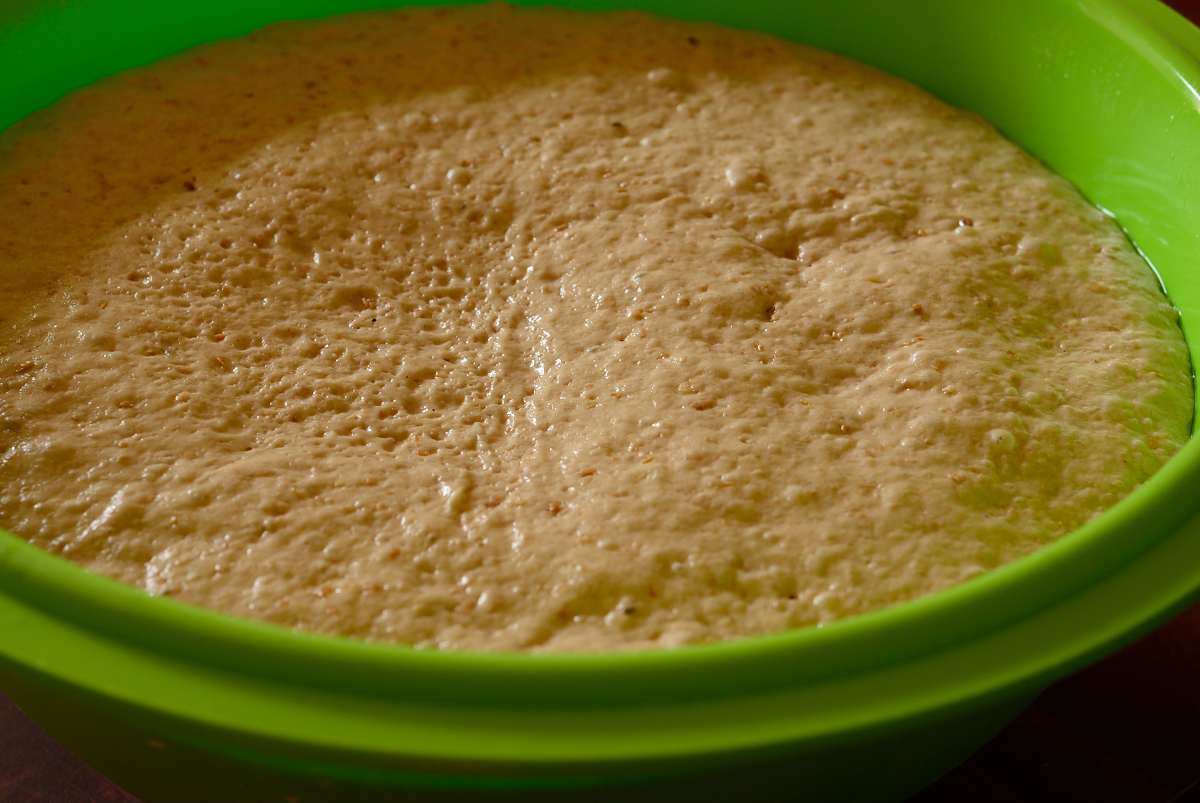
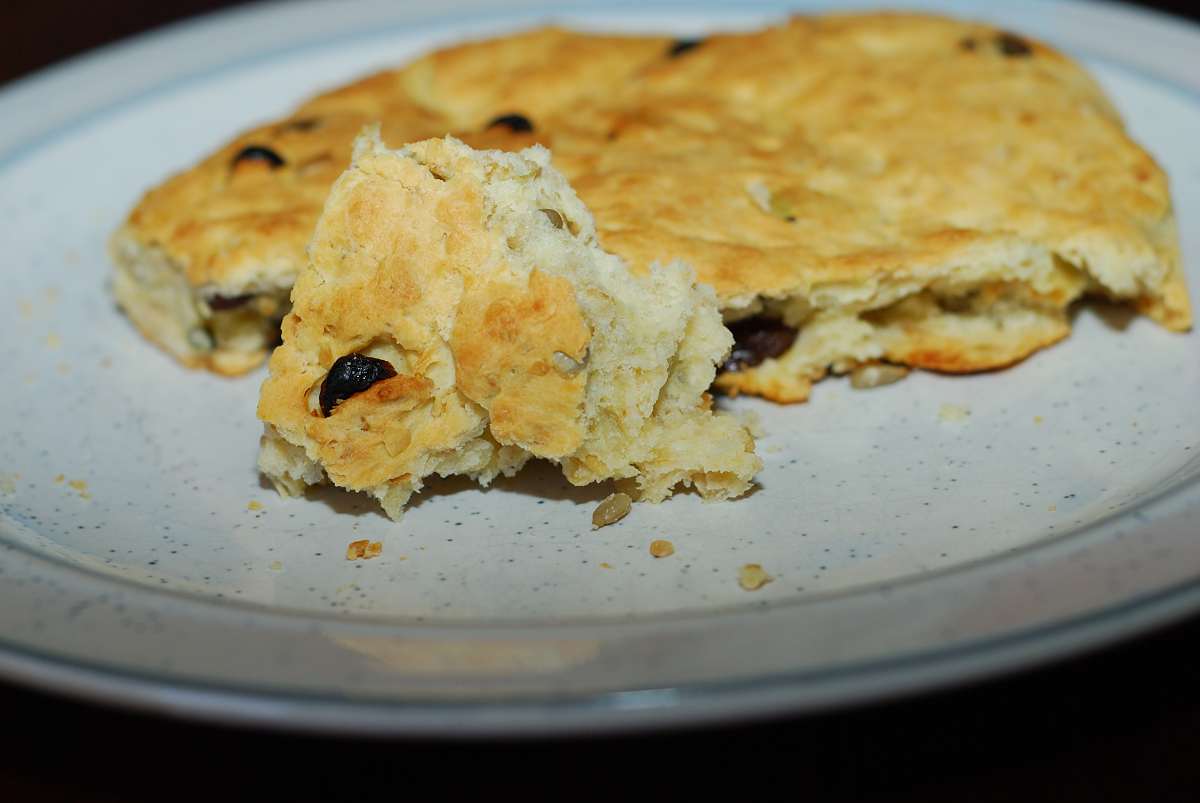
Crossing Another Mental Hurdle: Multigrain Sourdough Loaf


Interesting how we all learn mostly from our own experience. Edward de Bono has written at length about the thinking process and thinking mistakes. And somewhere the idea emerges that problem solving is a process that will get you back to where you were. Progress requires different thinking.

And so it is with me too. I wrote a whole blog post describing a way to get out of a thinking rut in the realm of photography. Then, in the wee hours of the morning when everything is quiet except for the noises from the southeaster howling outside, it dawned on me that perhaps I am in a baking rut too. In a way of speaking.

Nothing out of the ordinary, nothing really wrong. But a definite feeling of having to do something new, something out of the ordinary.

Later that morning, after the early morning chores had been attended to, I opened my copy of Crust And Crumb by Peter Reinhart. The book is a veritable treasure trove on the various processes going on inside the dough. Worth reading several times and keeping it as a ready reference when planning your next loaf.

I decided on a multigrain sourdough loaf. Just for the difference in process and a new way of preparing the dough. I have never made bread that took longer than a morning or so, from preparing and kneading the dough until the baking is done. This was a going to be a first for me.


This blog post also linked to Yeastspotting!

Authored by Johan Zietsman

Last updated on 2013-12-12

Friday, 22 November 2013

Home Baked Bread: A High Fibre Loaf

At last I am back in my favourite kitchen. Home. After two months away and many culinary adventures later, I am back in my own homely little kitchen.
The words do have a cosy ring to it, much like the Mole's place in The Wind In The Willows by Kenneth Grahame. Your own place has this feeling of home.
Having been away for so long, I had this primordial urge for proper bread. I crossed a mental hurdle just before my departure on the last voyage, so the missus hasn't tasted the version of bread I now bake. I purchased a copy of Peter Reinhart's book The Bread Baker's Apprentice some time ago and studied it. You have to open and study the book.

Which means reading intensively several times. Especially the part about what happens when you start mixing flour, water, salt and yeast. I had ample chance to experiment on the voyage, mostly successfully and often very successfully. The challah I made on board could be the best loaf I made to date. I shall certainly strive to top that one. This time around I decided on a plain and simple loaf. Light Wheat Bread is the heading in the book. The recipe in the book requires whole wheat flour. I do not have flour with crushed wheat, so I used brown bread flour instead. The flours that I use are whole grain, stone ground, unbleached, non-GMO anyway, with the brown bread flour having ample wheat husks to give the loaf a rustic coarseness. Long words to describe decent, old fashioned coarse flour.


This blog post moved to the link below as part of consolidation. Thank you for your patience.

Sunday, 18 August 2013

Raisin Sourdough Rusks: Very Traditional South African Fare


Ever had rusks with your coffee?


If you have been to South Africa or live there, you will know that these hard biscuits are almost inescapable. Together with coffee and biltong (beef jerky), rusks make up a full camping meal. Or a light breakfast.

I have reason to believe that these may have originated from dried bread supplied to the ships sailing around the Cape in the days of yore. Before refrigeration and the internal combustion engine. They would then naturally be part of the fare that the Voortrekkers of old took on their long treks in ox wagons into the harsh South African hinterland in 1838.


Light food to pack, if a bit bulky. But they will last almost indefinitely as long as you keep them dry.

Nowadays you find them in all grocers as well as most of t
he craft food stalls and bakers. And rusks are available in a myriad of styles.

The raisin water that started it all.

All using instant yeast or commercial yeast of some nature.


So I decided that it is time for some microbiology. An experiment to catch a yeast from raisins, then use that to make rusks in the traditional South African style.

These are called mosbolletjies, after the fermenting grape mush that they were first made of. The Cape had lots of grain and lots of grapes, even in those bygone days, so it was natural to use the fermented grapes in a sourdough starter.


I resorted to raisins. Bought them from my nearest grocer. Big mistake. It took almost a week before anything happened. Even after spiking the watery raisins with some brown sugar. Then it dawned on me that the raisin packers would take measures for the raisins not to ferment or go off in some other way. Therefore the raisins would be treated with a layer of wax after being washed, and possibly irradiated, to kill all germs, yeasts, bacteria and other flora generally mostly good for you.

Much volume after the first rise.

So I waited a bit more. My patience eventually paid off. There is no holding back of Mother Nature once she gets going. I saw some small bubbles forming. I waited another day or so, then fed the lot with about three tablespoons of stone ground, whole wheat, unbleached flour.


The results were immediate. Well, almost. The mix doubled in volume within three hours, so I added another half cup full of the same flour. This also took about three hours to double in volume.


Resting nicely after the first rise, looking just  enough.

At this stage I decided that I had a proper yeast. I split the mother into two, feeding each with a cup of flour and some water. Just enough to make a nice runny mix. These were left on the kitchen counter to bubble away merrily. Once these were lively enough to my judgement, one was promptly put in the refrigerator while the other went into my dough mix.


After reading The Bread Baker's Apprentice and Crust and Crumb, both by Peter Reinhart of the Fresh Loaf, I made up a dough with about 75% hydration. For this one I used two cups of rye, two cups of brown bread flour and six cups of white bread flour. Into this went about 40 grams of baking fat and two teaspoons of salt. Since this was to become rusks and not regular bread, I also added about ¾ cup of sugar. Rusks are supposed to be sweet, so I hoped for the best that the yeast will not consume it all!


Roll into small sausages. These differ from normal bread.
And of course, I would be remiss if there was no aniseed seeds in the mix. This was sorted by adding a royal helping of the seeds to the mix. The sourdough was added after mixing the dry ingredients thoroughly. The sourdough constitutes probably 500 ml of the water content, so I adjusted the rest of the water accordingly. This was mixed into the dough, adding the rest of the water. The molten dough was added after letting the basic mix rest for five minutes. No kneading yet!


After mixing the lot in, I kneaded the dough until it became silky to the touch, then left it to rest for ten minutes. The dough was still reasonably soft. This was patted with oil on the hands, then stowed in the large covered mixing bowl in the cold oven.


This lot was left to ferment overnight. It is really cold here at present, the day temperature inside the house being in the order of 17ºC/63ºF. So I reasoned that the dough will ferment slowly. I was right. The dough triple in volume overnight, which was good. The rest of the processing reduces the volume again, so there is time for a second rise.


Decent notes help to give you proper proportions of ingredients
This is where the making of rusks deviates from the bread making process. The dough is tipped gently out on to a floured kneading board and left to rest for twenty minutes. Then it is rolled into a snake just over 30mm thick (a bit over an inch for my other friends). This snake is cut into two inch sections , rolled into a ball , then rolled into a short sausage again before being stacked in a baking tin. This ensures that the pieces can be broken off after baking. Perhaps this is akin to making dinner rolls, except you pack these tight.


Leave these infant rusks to rise for another hour or so, until double the volume. Then dab some egg and milk wash on top before baking them at 175ºC/350ºF for thirty minutes. I spritzed the oven with water at the start, then twice again at five minute intervals. At twenty minutes I turned the baking tins around to get an even bake on the tins.

Pack tightly in the baking tray.  Neatness not really required!
At thirty five minutes the rusks were removed from the oven and left to cool. This part of the process is the same as for bread. The dough is still cooking for at least forty minutes after removal from the oven, as it is filled with steam.

Once cooled down, the rusks are broken apart and spread on a baking tray for drying. I dry mine at 125 175ºC/250ºF, just a tad over boiling point.  Two hours should see them nice, crisp and dry. This ensures good evaporation and some tanning to boot. We have no use for pale white rusks in this house! These are stored in a cake tin or plastic container away from humidity. They will soak up humidity like anything.


Especially coffee. They were designed to soak up coffee.

Voila, behold, your sourdough rusks!

Fully laden roaster
This was the first time I really paid attention to the relative quantities of ingredients in the dough. This is thanks to Peter Reinhart's admonishments! But jokes aside, I now am getting repeatable results. Predictable results, even without measuring internal temperatures or controlling the environment for any of the pre-ferment or the final proofing. It just shows what a little attention to detail can accomplish.

I would leave out some of the fat from this recipe next time I want to make rusks. Rusks are dry and as such will last a long time anyway. The fat will keep loaves fresh in bread form, so there is already a design difference. The rye also makes them a bit on the sour side, perhaps, so I shall leave out the rye altogether for rusks.

The rye contains less gluten than other flours and as a result you may find that the dough rises less than dough made with other flours. This will result in a more dense crumb. The extra density is not altogether unwanted in rusks. But the amount of handling and forming before the second rise will take care of that, resulting in a more dense crumb anyway. So the rye does not really add much to the end result.

Check for even baking, Wash with egg and milk mix.
Whatever you choose to do, these rusk soak up coffee as advertised and taste good too. Especially with the added aniseed flavour.


This post also linked to Yeastspotting!


Authored by Johan Zietsman.


Last updated on 2013-08-18
Break loaf into rusks after cooling, then dry them.

Monday, 5 August 2013

Is Light Sourdough Bread A Myth?


Perhaps the holy grail of all bakers: how to make a light loaf. This prize has been escaping me for a while now. Even after extensive consultation and blatant, overt picking of brains, my loaves came out on the heavy side. Whatever yeast I was using, the problem remained. Sometimes the loaves did come out reasonably light, but not light enough to my taste.

That is, until two days ago. I reasoned that the problem did not lie in my understanding of the oven and heat flow, nor was it vested in the ingredients. Therefore the problem had to lie in the process. So I sat myself down and started thinking.


...Read More...


Authored by Johan Zietsman.

Reposted from The Hungry Sailor on 2013-08-05

Baking Sourdough Ciabatta After Consulting My Baker Gurus


Perhaps I should have called this post 'Making Headway Against The Vagaries of A wild Sourdough.' But this is not a lamentation.

I actually have two experienced bakers to consult. Not too shabby. So between the two sets of advice and my trusted copy of Classic Sourdoughs, Revised by Ed Wood and the late Jane Wood, I set out on my next affray into the wonderful world of baking with sourdough.

I have the oven temperature and the spritzing with water under proper control. Ditto for the dough mix. And I am getting a wonderful fermentation of the starter as well as the main rise. I mix about a cupful of the mother with another cupful of flour for the starter, adding just enough water to make the starter somewhat runny. I go with personal judgement on quantities; this is worth about two cups of dough in the final mix, so I am not too worried about exact quantities.


...Read more...


Authored by Johan Zietsman.

Reposted from The Hungry Sailor on 2013-08-05

Fresh rolls on the griddle


I recently had a few bright moments. At least, I think I had. Those moments when you are overcome with a sudden surge of hate for the daily drudgery and just knowing that it is time for something else.

In this instance I had the idea of shaking off all the ingrained inhibitions of a blogger of carefully planning, inventing and preparing a dish. Reworking the recipe and so on.

Drudgery at its best.

We have a regular Wednesday night braai (barbecue for my overseas friends) at the local yacht club.  “We” being a circle of friends and fellow sailors. There we literally share the food. One piece of meat is cooked at a time, whether it be sausage or a well matured steak. This is then cut into bite size slices and dished out. Then the next piece of meat goes on the griddle. And so on. Rather like a very South African dry fondue, if you will.


...Read more...


Authored by Johan Zietsman.


Reposted from The Hungry Sailor on 2013-08-05


Forget your low GI diet: Sourdough Babka alla Ziets


I recently had another chance at pondering life and my experiences in general, having had a knee replaced. The time in hospital, drifting in and out of a pain killer induced daze, is quite useful for this sort of pondering. I pondered about my cooking and my lifestyle. And then some more. I thought that it was time for some baking again.

The operation went super well, everything just fine. The problem is now that I need to take things slowly, lest I damage the new joint in its settling period. So I have to slow down, take it easy. Lots of rest.

This had me reminisce about my hunting and fly-fishing days. I realised, after a number of unsuccessful outings, that you don't see anything until you slow down to the rhythm of the veld. Then suddenly, life explodes before you and you are swamped with images of movement and happenings. Like seeing a fish jump out the water and take an insect from the air. Or, once on a memorable occasion, a bass taking a malachite kingfisher in flight. But that is a different story.

Authored by Johan Zietsman.

Reposted from The Hungry Sailor on 2013-08-05


Bannock: Another Fallow Field of Fast Food?


This is another venture into, for me at least, an unkown field. This time it is yet another staple food, namely bread in the form of bannock.

I was recently challenged by a fellow food blogger to come up with something out of the ordinary.  Her name is +Dionne Baldwin and she is a devoted foodie and teacher, working hard in her community.

The reward for the challenge is a guest blog post on her blog at Try Anything Once. 

In sympathy with +Dionne Baldwin 's community work, I decided to make the type of bread known as bannock.

Bread comes in many forms, including the familiar sandwich loaf you buy from the supermarket. Similar forms of bread also originate from different areas in the world. And bread does not have to be dull or ordinary.


...Read More...


Authored by Johan Zietsman.

Reposted from The Hungry Sailor on 2013-08-05

Palappam: A Venture into the Unknown


Food bloggers are a creative bunch of people. Which means they try new things, just to tickle their fancies. They also do dares, which stretches the imagination some more. So, this happened to me as well.

A fellow food blogger, +Dionne Baldwin , dared our Google+community to do something outside the box, to stretch yourself in public, so to speak. No quiet experimentation in the back room, everything up front. And here is the result.

I am a great lover of Asian cooking. The spices being one of the reasons. There is much to say about the use of spices and I have more than a vague suspicion that one needs some more of those spices in your diet in order to stay healthy. That is, barring the exquisite taste.

But there is a more compelling and obvious reason to look at Asian cooking. All of the traditional foods are home-cooked and done in short time. The mother of the house does not have time to dilly-dally around cooking the main dish for the family dinner. Therefore most of the recipes are quite easy and quick to make. Which translates to simple utensils and equipment and simple procedures.


...Read more...


Authored by Johan Zietsman.


Reposted from The Hungry Sailor on 2013-08-05

The Next Baguette Experiment Using Sourdough


My first foray into making baguette ended in a success. I was using instant yeast for those, as I was feeling out on a limb a bit. One of the vagaries of blogging is that one's ego tends to get in the way with the cooking and you wish for a resounding success every time.

Well, the world simply does not work that way. However, it is a lot easier on the ego to just define your effort as an experiment. Then most of the results are a success because then you tend to learn a little with each experiment.

Exactly my thinking this time around. I took a deep breath, opened the refrigerator and hauled out my trusty wild sourdough. Time for the next experiment. I had already proved to myself that I can bake a decent baguette, even though it comes out a bit heavier than the industrial ones. Now it was time for the sourdough version a la Ziets.


...Read More...


Authored by Johan Zietsman.

Reposted from The Hungry Sailor on 2013-08-05


Sourdough loaves with caraway seeds


Yesterday I got a gentle prompt from the missus that we were running out of bread. Time for another loaf.

The last one was not half bad, having sunflower and pumpkin seeds along with the rye. Although it did not rise as expected, the bread lasted long enough for me to take a loaf on board the yacht for the voyage from Port Owen on the West Coast to Gordon's Bay around Cape Point. Good food to have on board.

I was a bit miffed about my starter after my last baking experiment, until I realised that I may have had the dough too runny and did not allow sufficient rise time.

This time around I made a starter by washing the sourdough, dividing it in two and feeding it white bread flour. (AP flour for my American readers.)


...Read More...


Authored by Johan Zietsman.

Reposted from The Hungry Sailor on 2013-08-05

Sourdough Loaf With Sunflower and Pumpkin Seeds


I was quite pleased with my previous effort at baking bread. Especially with getting past my own fear of trying something new or different. And I am getting withdrawal symptoms!

So the decision went to making a sourdough loaf with sunflower and pumpkin seeds. I consulted my copy of Classic Sourdoughs, Revised by Ed and Jane Wood for ideas. The normal recipe requires all-purpose or white bread flour, but I opted for one cup of rye which I used for the starter, then added two cups of brown bread flour to this. Some salt followed, along with the ¼ cup each of sunflower and pumpkin seeds. I used the seeds raw, as per the recipe. I made bread, using sweetcorn before, which was edible but not really something you want to do often. The taste does not warrant the effort. Better to make a corn loaf with some maize flour added, then use the sweetcorn as an addition.


...Read more...


Authored by Johan Zietsman.

Reposted from The Hungry Sailor on 2013-08-05


Korma Curry, Boat Style, With Rotis


I have often thought about the difference between what I do versus your standard urban food blogger, cooking in his or her five star kitchen. Complete with all the electricity and associated equipment. I have also thought at length about what I call in Afrikaans “afskeepkos”. Food made in negligence. I have gone so far as to post (or is it “pose”?) the question on my FaceBook wall, with some reaction.

The answer is not easy to find, as the term “afskeepkos” is a neologism, even in Afrikaans.

The proper answer needs to be researched and pondered, if you will.


...Read More...


Authored by Johan Zietsman.

Reposted from The Hungry Sailor on 2013-08-05

Baguettes: Are They Really So Difficult To Make?


I was scared of making baguettes for a long time. For no apparent reason, just an eerie feeling of awe. Perhaps the whole reputation of the baguette got to me.


Until today. I decided that this is just another bread recipe and I am quite able to make bread. In fact, I have been researching and practicing the art for almost a year now. About time for the leap of faith, don't you think?

I already crossed the hurdle of having steam in the oven, so that would not be a problem. I also solved the problem of over-baking the loaves, which has to do with the fan in the oven and having a more even temperature gradient in the oven. I now use a temperature setting of 20-25 degrees C lower than what the recipe asks for. After the requisite baking time, I check the status of the loaves and may up the temperature or leave the loaves to bake a bit longer or both. The problem only arises when you already have too high a temperature and things happen faster than one anticipates. Perhaps there is another lesson there.


...Read More...


Authored by Johan Zietsman.

Reposted from The Hungry Sailor on 2013-08-05

Sourdough Brown Loaf on Bricks: Part Two of the Experiment


My previous blog post documented my first affray into the world of baking on a stone. The experiment was successful in two parts.

Firstly, I tested a new method of baking. I used paving bricks as an oven stone to get more thermal mass in the oven to help keeping the temperature stable. Secondly I tested a new idea with the dough that I was using.

On both counts I learnt something.


Authored by Johan Zietsman.

Reposted from The Hungry Sailor on 2013-08-05

3rd Leg Day 10: The Big Cleanup, Last Puri And A RAS Exercise


Last Puri


Or is it khubz, perhaps? Today I made the last bread of the voyage. Literally. All the flour has now been consumed. I did not even bother to treat the sourdough nicely. I just fed it some rye flour and a little water after taking it out of the refrigerator, then left it in the cupboard for nine hours to wake up.

The oven has been decommissioned, so the bread had to be baked or fried in a pan. I chose to make a thin flat-bread, Even the flour mixture was sort of pot luck.


...Read More...


Authored by Johan Zietsman.

Reposted from The Hungry Sailor on 2013-08-05


2nd Leg Day 28: Entering the Caribbean and a Sourdough Seed Loaf


Sourdough Seed Loaf


I made another sourdough loaf today, adding seeds and raisins. The sourdough starter was mixed during my 00h00 to 03h00 watch and left to proof until daylight. While this is not overnight, bear in mind that the ambient temperature is still over 28ºC/82ºF, so you get a fast reaction from your favourite sourdough.

The sourdough proof was used this morning to make the final dough mix, which was left in the cold oven aboard to rise.

...Read more...


Authored by Johan Zietsman.

Reposted from The Hungry Sailor on 2013-08-05


2nd Leg Day 24: Sweetcorn Rye Loaf, Navigation and Sweet & Sour Fish

Today the wind returned and we are able to motor sail. The wind is not that strong yet.

Dawid started coastal navigation lessons yesterday and got some homework, which he actually did. We reviewed it this morning. Another tutorial or three and he will be ready to do his practical work for real when we pass Barbados and reach the Windward Islands.

He followed on by preparing, kneading and baking his second loaf. A rye loaf with sweetcorn, as was his wont. He is turning out to be a real student. His surname is Schoeman, Dutch for shoemaker, but we are considering to change it to Bakker, Dutch for baker. However, with the navigation lessons also progressing nicely we need to think up a new pseudonym for him. Perhaps Dawid the Charter. Or perhaps Dawid the Plotter. The options remain open for the time. For Renier we have reserved the title Numero UNO, after his unbeatable performance to date.


...Read More...


Authored by Johan Zietsman.


Reposted from The Hungry Sailor on 2013-08-05

2nd Leg Day 21: Of Bread and Fish and Stirfry Chicken

 A somewhat Biblical day we had today, no less. We have a new novice baker on board. And three exited fishermen. After a few days of very little happening, we had lots of excitement today to make up for the tedium.

Dawid decided that he wants to learn to bake bread. The way he carries on he may just become the baker's apprentice, like the title of the book. However, first things first. We decided on an easy loaf for his first affray into the floury world of dough. The ingredients are simple and you get to experience all the facets of making bread.


...Read more...


Authored by Johan Zietsman.


Reposted from The Hungry Sailor on 2013-08-05

2nd Leg Day 6: Cheese & Onion Loaf, Squalls and Fish Curry


Today is Monday, 6 August. We have been at sea for six days since leaving St Helena, and 22 days since leaving Cape Town. We have about 35 days of the voyage left, depending on the weather.

Dawn saw an overcast sky, gray and rainy. Renier got his the first dowsing from a squall on the voyage during his 00h00 to 03h00 watch slot, I mine on the 06h00 to 09h00 slot. Dawid was spared a dowsing for this round. The weather was cool enough to warrant a T-shirt and a rain jacket. Later in the morning the clouds cleared somewhat and blue sky was to be seen all over. But the squalls stole our wind and we had to motor along. Needless to say, in these conditions we did not catch any fish.

...Read more...

Authored by Johan Zietsman.

Reposted from The Hungry Sailor on 2013-08-05